Test English Resource

Introduction

The English do like their tea, but in Cornwall, we take it to the next level with “The Cornish Cream Tea”. It is a delicious afternoon treat.  But, be warned, there is strict ettiquette for how to eat them. 

Listen to my introduction to find out more.

Learning outcomes

  • Vocabulary for tea-time.
  • Verbs related to making tea, and cakes.
  • Practice your listening skills through a song.
  • Interactive chat to invite your friend to join you for a cream tea (or similar) because you have something to ask them.
  • Grammar:
    • verbs followed by -ing or infiinitives.
    • using do/does and did for emphasis.
ThePlus Audio by The Plus
00.00
  • ThePlus Audio

Warm up

The fruit stall

Behind each fruit is its name and some adjectives you can use to desribe it.  

The vegetable stall

Behind each vegetable is its name and some adjectives you can use to desribe it.  

Kitchenware

Behind each image is its name and some adjectives you can use to desribe it.  

Understanding English

Song

Everything Stops for Tea - Professor Elemental
00.00
  • Everything Stops for Tea

Gap fill exercise

British Treats for Afternoon Tea

In Britain, many people enjoy afternoon tea. It is a light meal in the afternoon. People drink tea and eat sandwiches or small cakes.

One special treat is a Cornish cream tea. This includes a pot of tea, scones, clotted cream, and jam. People cut the scone in half, spread jam on it, and then add a spoon of cream. It is very tasty!

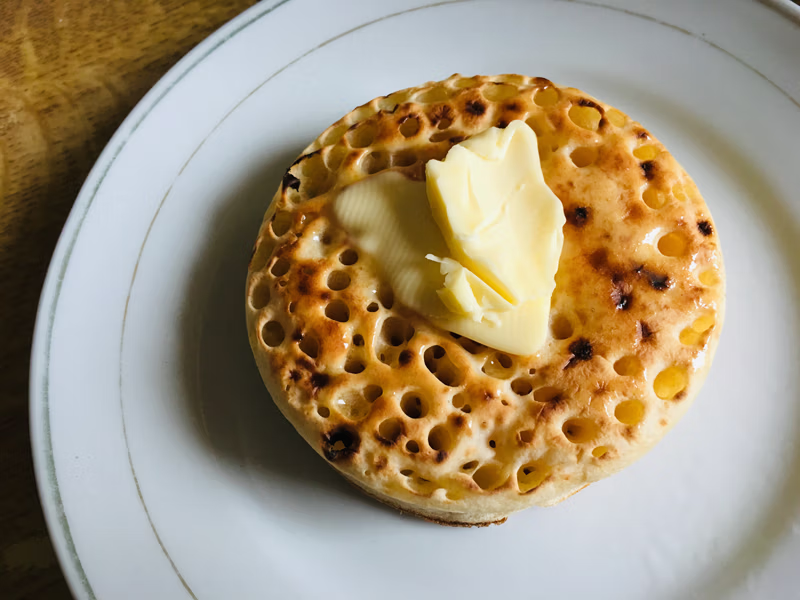
Another favourite is a crumpet. A crumpet is round and soft with small holes on top. People toast it and put butter on it. The butter melts into the holes. Some people also add jam or cheese.

Teacakes are also popular. These are soft buns with dried fruit. People toast them and eat them with butter.

Sometimes, people have small sandwiches with tea, like cucumber sandwiches or egg and cress.

Afternoon tea is a lovely British tradition. People enjoy it with friends or family, often in a quiet café or at home.

Crumpets
Teacakes

Language Focus

“I want to go out this afternoon.”  – “I like sitting and watching the world go by.” – “I’d like to go to that new beach cafe?”- “Do you fancy joining me?” – “We could have a cream tea!”

Each of these verb (want, fancy, like, would + like, can/could) must have a verb in the correct form after them 

  • to infinitive
  • the infinitive without to or,
  • the -ing form.

To learn these forms, it’s useful 

  1. notice when two verbs are together in a written text, and write them down.
  2. say them aloud in meaningful sentences.

That’s much more effective than learning lists. 

There’s more

Other verbs can use either form after them, and some other verbs can use either form, but they have different meanings.  There’s more about them in the Download Materials section below.

Now your turn

Lorem ipsum dolor sit amet, consectetur adipiscing elit. Ut elit tellus, luctus nec ullamcorper mattis, pulvinar dapibus leo.

How helpful was this lesson?

4.0/5 from 1 votes